
How to Check Criminal History in Limestone County
No single Limestone County criminal records database covers every arrest, charge, judgment, and custody event. Begin by deciding what fact needs proof. The County Clerk holds Class A and B misdemeanor files and has described iDocket coverage from 1985 forward. The District Clerk is the direct search and copy contact for felony cases in the 77th and 87th Judicial District Courts. The Sheriff holds its own incident and jail records, while Texas DPS compiles reportable events submitted by agencies and courts across the state.
Use a full legal name, spelling variants, an approximate year, and a case number when one is known. Date of birth can help distinguish similar names when a lawful search form or clerk accepts it. Then compare the result with the source's scope instead of treating any blank search as proof that no record exists.
- Choose the likely record holder: County Clerk for a misdemeanor, District Clerk for a felony, the issuing municipal or justice court for a fine-only case, or the Sheriff for a jail record.
- Search the available docket or contact the clerk with the name, approximate year, and cause number if known.
- Check current custody through VINELink or the jail, but do not read a custody result as a complete arrest history.
- Use the DPS public CCH search for the statewide public conviction and deferred-adjudication layer.
- Order a plain or certified court copy when the exact filed charge, disposition, or sentence must be verified.
Note: Older misdemeanor files and felony images missing online require direct clerk contact, since a portal gap is not a record conclusion.
Three Limestone County Criminal Record Trails
The courthouse, the Tyus Street jail complex, and DPS preserve different parts of one event. An arresting agency writes an offense or arrest report. If the person enters the Limestone County Jail, the Sheriff creates the booking, property, fingerprint, photograph, charge, bond, and release records. A prosecutor and court may later report charging and disposition events to the Texas Computerized Criminal History system. Each stage can use different charge wording because an initial allegation may be declined, amended, enhanced, dismissed, or resolved.
The official Limestone County site identifies the courthouse and county offices that anchor the local trail.

The county homepage is a routing point, not a combined criminal history search. Ask the keeper of each record for the part it controls.
Record flow: Arresting agency report → county jail booking when received → prosecutor charging decision → court docket and disposition → reportable updates submitted to Texas DPS CCH.
Official Texas Background Checks
The Texas Department of Public Safety offers a public, name-based Criminal History Conviction Search. Any member of the public may create an account and use prepaid credits. For Limestone County records, the product discloses the public conviction and deferred-adjudication information authorized by state law. It is not a fingerprint-confirmed record and may match the wrong person or miss a record filed under different identity details.
The DPS public criminal history search is the official entry point for that statewide public layer.
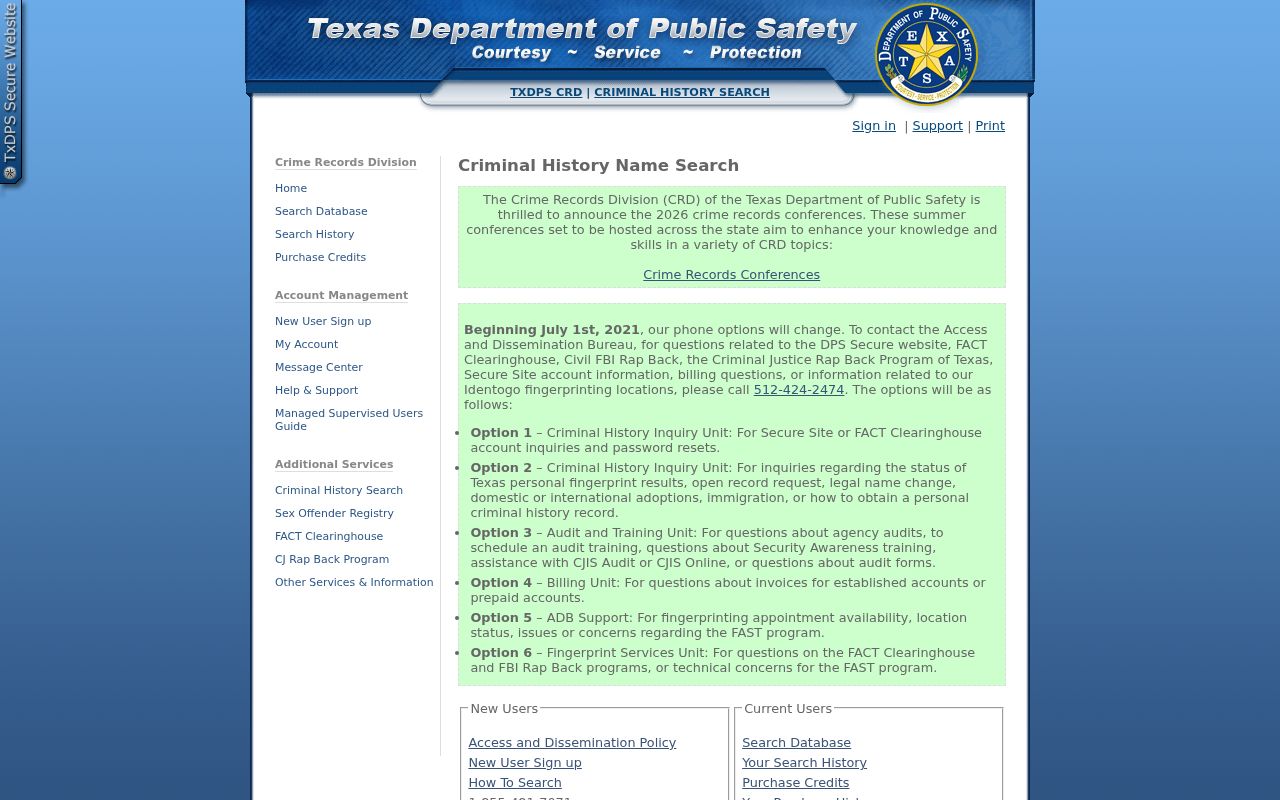
For a Limestone County criminal history search, the portal requires an account and consumes a credit even when no matching record is returned. Preview likely matches before opening a full result.
For a person's own most accurate Texas identity match, DPS directs the person to fingerprint-based personal review through FAST and IdentoGO. That route is meant for self-review and error correction. It reaches a different level of identity certainty than a public name search.
| Official product | Published amount | Scope |
|---|---|---|
| DPS online name search | $1 credit per search, plus stated card-order fees | Public Texas convictions and deferred adjudications; name based |
| DPS CR-42 mail search | $10 per search | Public criminal history under Government Code §411.135 |
| DPS fingerprint record check | $15 | Fingerprint-matched Texas record check |
| FAST collection fee cited by DPS | $10 | Electronic fingerprint capture for the cited personal-review route |
Limestone County Criminal Search Identity Limits
A low-cost Limestone County name search is useful only when its limits stay visible. The DPS instructions distinguish exact spelling from similar-sounding matching and recommend stronger identifiers for common names. A search can use last name, first name, optional middle name, date of birth, sex, and race. Race should never be guessed. The portal also supports multiple queued entries and a preview step, but each submitted search uses one credit even if the answer is “no matching records.”
The official DPS search instructions explain credits, result handling, and the possibility of offline technician processing.

When an arrest cycle has no disposition, obtain the certified local disposition first. Then use the DPS error-resolution channel rather than assuming the record is current or complete.
| Search field | Use | Key caution |
|---|---|---|
| First and last name | Required name match | Use the legal spelling and known variants |
| Middle name | Narrows common names | Optional but useful |
| Date of birth | Strong disambiguator | Use the correct MM/DD/YYYY value |
| Sex and race | Additional identifiers | Do not infer either value |
| Preview | Checks candidate matches | Review before opening a full result |
Types of Criminal Records
Limestone County criminal records are products of separate public offices. The creating agency usually remains the right request target, even when the same event later reaches another system. A Mexia police report stays with Mexia Police, for example, while the Limestone County jail booking created after that arrest belongs to the Sheriff.
- Arrest and booking records: show the initial accusation, intake, bond, custody, and release facts, not guilt.
- Criminal court files: show the charge actually filed, settings, motions, plea, disposition, judgment, and sentence.
- DPS CCH cycles: combine reportable agency, prosecutor, court, and supervision submissions in a statewide repository.
- Warrant records: may originate with a district, county, municipal, or justice court and can remain limited while active.
- Custody and supervision records: distinguish county jail, TDCJ custody, community supervision, and parole.
- Registry records: publish only the lawful public part of a qualifying registration record.
A Limestone County public record result must be read in context. A booking entry says the person was received into custody. A case disposition says what the court did. Neither can be substituted for the other.
Limestone County Criminal Jail Lookup Gaps
No county-hosted inmate roster, booking-log search, warrant list, or mugshot gallery was verified. The fallback starts with the Limestone County Jail's round-the-clock telephone line at 254-729-3278, then the official Sheriff's VINELink route for current custody status. A written Texas Public Information Act request can seek an existing booking sheet or release event that is not published online. Call before visiting because lobby and records-counter rules were not posted.
VINELink can report a current Limestone County custody event and can support notification registration. It is not a historical arrest archive. After a transfer to state custody, use the TDCJ Online Inmate Search rather than continuing to treat the county jail as the current keeper.
Limestone County Sheriff
912 N. Tyus Street
Groesbeck, TX 76642
254-729-3278
Administration: Monday-Friday, 8 a.m.-5 p.m.; jail operates 24/7
County Clerk
200 W. State Street, Suite 102
Groesbeck, TX 76642
254-729-5504
Monday-Friday, 8 a.m.-5 p.m.
District Clerk
200 W. State Street
Groesbeck, TX 76642
254-729-3206
Confirm copy and archive timing before visiting
Note: A city police report does not become a sheriff report merely because the arrested person later entered the county jail.
What a Limestone County Criminal Record Shows
The fields depend on the product. A DPS CCH cycle may contain identity data, an arrest tracking number, agencies and charges, prosecutor actions, court cause and disposition, sentence, and later custody or supervision updates. A Limestone County court file can add docket events, appearances, motions, bond activity, financial orders, and images. A booking record focuses on intake and release.
| Name & Identifiers | Name, aliases, date of birth, sex, race, and repository identifiers where lawfully displayed |
|---|---|
| Arrest / Booking Data | Agency, booking number and time, initial charges, warrant, bond, and release status |
| Charges & Statutes | Filed offense, code citation, degree or class, and later amendments shown by the court |
| Disposition | Conviction, dismissal, acquittal, deferred adjudication, or another entered result |
| Sentence | Confinement, fine, restitution, or community supervision stated in the judgment |
| Custody / Supervision Status | County custody, TDCJ status, community supervision, parole, or release data when properly reported |
Complete dates of birth, Social Security numbers, driver's-license numbers, victim and minor identifiers, sealed content, and other protected details may be redacted or withheld.
Limestone County Criminal Record Terms
Limestone County docket language can look final when it is not. A bond amount is not a disposition, and a setting is not a judgment. These terms help separate a pending event from an outcome.
- Disposition
- The recorded outcome, such as conviction, dismissal, acquittal, or deferred adjudication.
- Deferred adjudication
- Community supervision without an immediate finding of guilt; qualifying public information may remain available unless nondisclosed.
- Capias
- A court writ directing that a person be taken into custody after a specified case event.
- Docket
- The chronological register of filings, settings, orders, and events in a court case.
- Community supervision
- The Texas statutory term commonly called probation.
The Limestone County Court posts date-specific docket PDFs that can show hearing types, five-digit cause numbers, offense class, file date, attorney, bondsman, bond amount, continuance count, and days in jail. Those calendars are subject to change and do not show a complete case profile.
Public Access Laws
The Texas Public Information Act generally allows access to information held by a government body unless an exception or separate confidentiality law applies. Limestone County law-enforcement records should be requested from the agency that keeps them. Court files use clerk access channels, while statewide public criminal history comes through the DPS product authorized for that purpose.
Key Texas laws:
Government Code §552.021 establishes the general right of access to public information.
Government Code §552.108 can protect specified investigative material while basic arrest information receives distinct treatment.
Government Code §411.135 authorizes the DPS public conviction and deferred-adjudication product.
Government Code §411.083 keeps DPS criminal-history information confidential except as statutes permit.
Code of Criminal Procedure Chapter 55A governs current Texas expunction law.
A Limestone County written records request should name a narrow date range, record type, location, and known report or booking number. Agencies may redact confidential details or seek a ruling. The statutory deadline to seek an attorney general decision is not a promise that records will arrive within ten business days.
Limestone County Criminal Fingerprint Review
A fingerprint personal review is the strongest way for a Limestone County resident to check an identity-matched Texas record. Follow current DPS personal-review instructions, then schedule capture through FAST/IdentoGO. Bring the identification and service code required for that appointment. No permanent IdentoGO site inside Limestone County was confirmed, so the live scheduler should determine the available site and time.
The Texas FAST appointment portal provides the live location and appointment path.
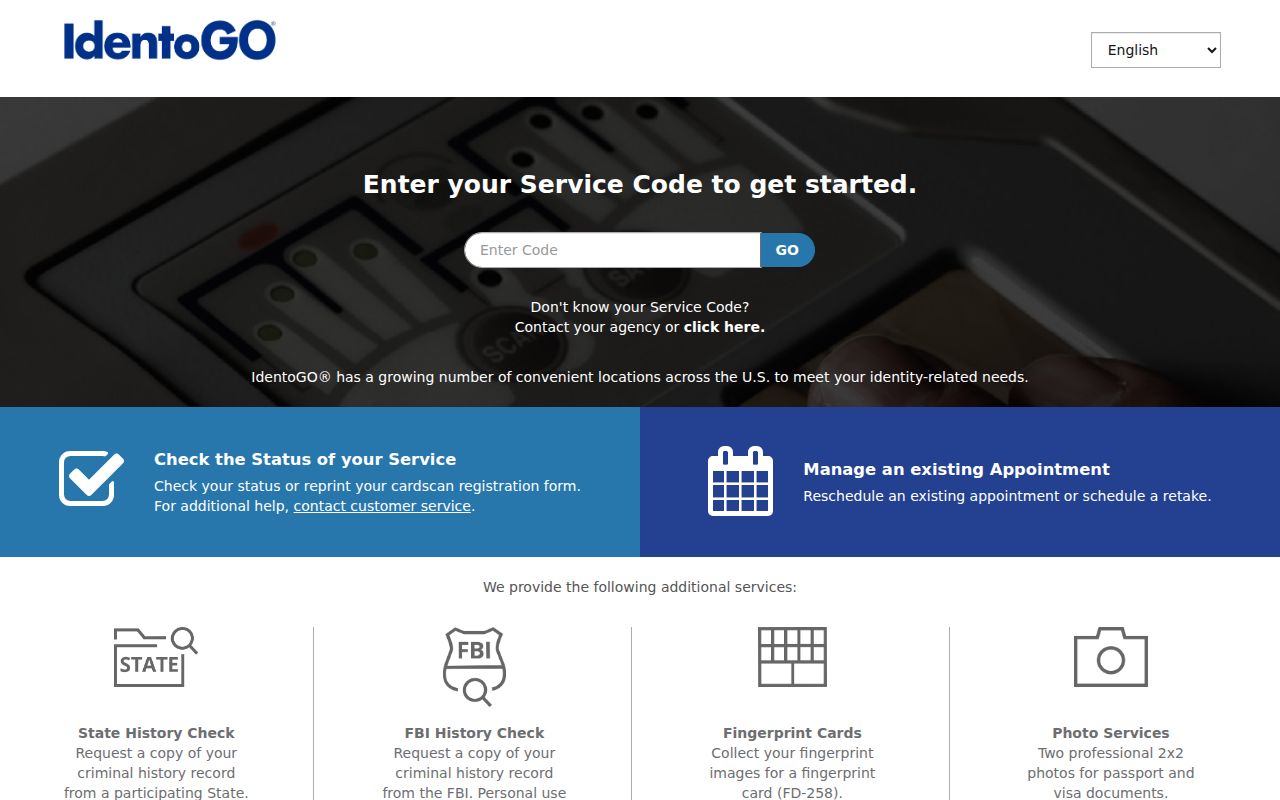
DPS states a $15 record-check fee plus a $10 FAST fingerprint fee for the cited personal-review route. Confirm the final charge while scheduling because service-code pricing can change.
If the result has a missing disposition or appears to belong to someone else, gather the certified court outcome and use the official DPS correction process. The DPS Crime Records forms and guidance page is the right source for current instructions.
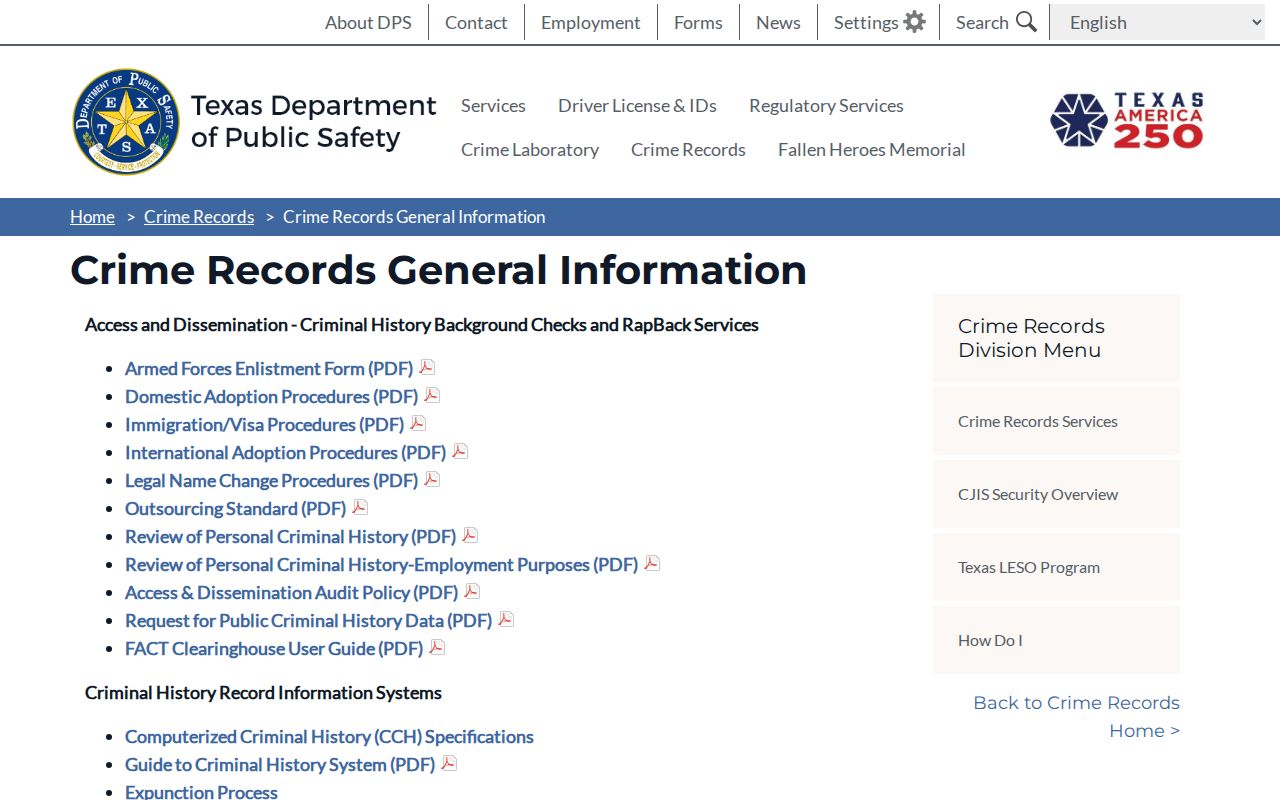
The correction channel addresses repository data. It does not rewrite the underlying Limestone County court file, which must be addressed with the office that maintains it.
Sealed, Expunged & Restricted
Texas separates expunction from an order of nondisclosure. Expunction under Code of Criminal Procedure Chapter 55A directs covered custodians to remove, destroy, delete, or return records as the order provides. Nondisclosure restricts public dissemination of covered criminal-history information but preserves access for agencies authorized by statute. Neither remedy should be assumed from the mere fact that a case was dismissed.
Limestone County record relief can turn on every charge arising from an arrest, waiting periods, limitations, pending charges, final convictions, and the exact outcome. Limestone County's County Clerk page supplies a nondisclosure petition and order form for qualifying misdemeanor matters. The filer must use the precise cause number and court, get the current fee directly from the clerk, and keep certified copies of any signed order.
Juvenile records, victim and minor details, full personal identifiers, active-investigation material, expunged records, and nondisclosed information may be missing from public results. A blank Limestone County portal result can also stem from a spelling mismatch, reporting delay, or limited date coverage. Absence alone does not explain why nothing appeared.
Limestone County Criminal Supervision Records
Texas calls probation “community supervision.” Limestone County CSCD supervises local felony, misdemeanor, and deferred-adjudication cases, but there is no complete public probation-status portal. A Limestone County court judgment or docket is usually the best proof that a court ordered supervision. Officer notes, treatment data, and working supervision files should not be presumed public.
Parole works through a separate state chain. The Texas Board of Pardons and Paroles makes release decisions, while the TDCJ Parole Division supervises people after release. TDCJ custody data, a court judgment, CSCD confirmation, and parole status each answer different questions.
The Texas Board of Pardons and Paroles publishes release-decision information and contacts.

A Board status belongs to the release-decision stage. It should not be used as proof of the original Limestone County charge or disposition.
The TDCJ Parole Division explains the supervision side of the system.
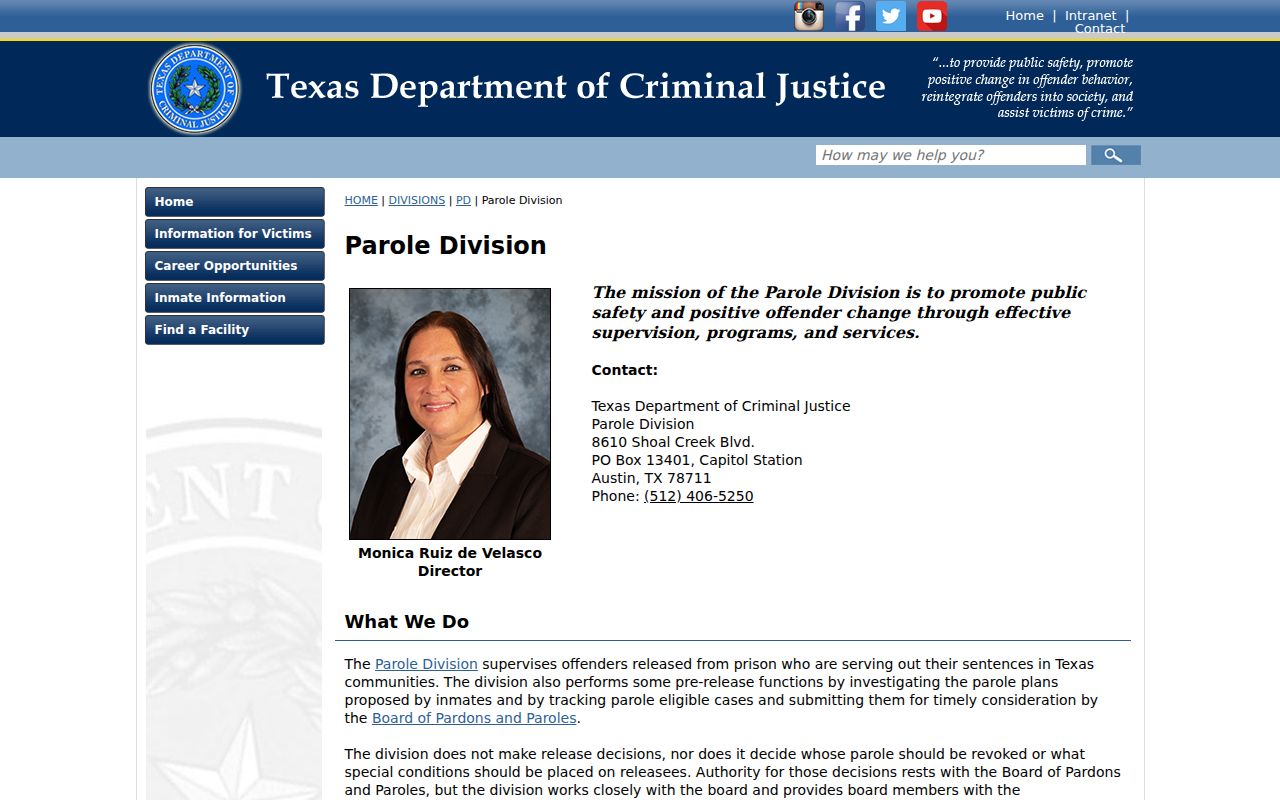
Limestone County maps to the Waco District Parole Office in Region IV. Use the live TDCJ office listing before relying on an address.
Limestone County Federal Criminal Records
Federal cases do not appear merely because a person searched a Limestone County clerk docket. Limestone County lies in the Western District of Texas, Waco Division. PACER and the PACER Case Locator provide federal docket access, while the federal Bureau of Prisons locator covers federal custody. Neither source replaces a Limestone County or state search.
The official PACER site provides registration and federal court record access.
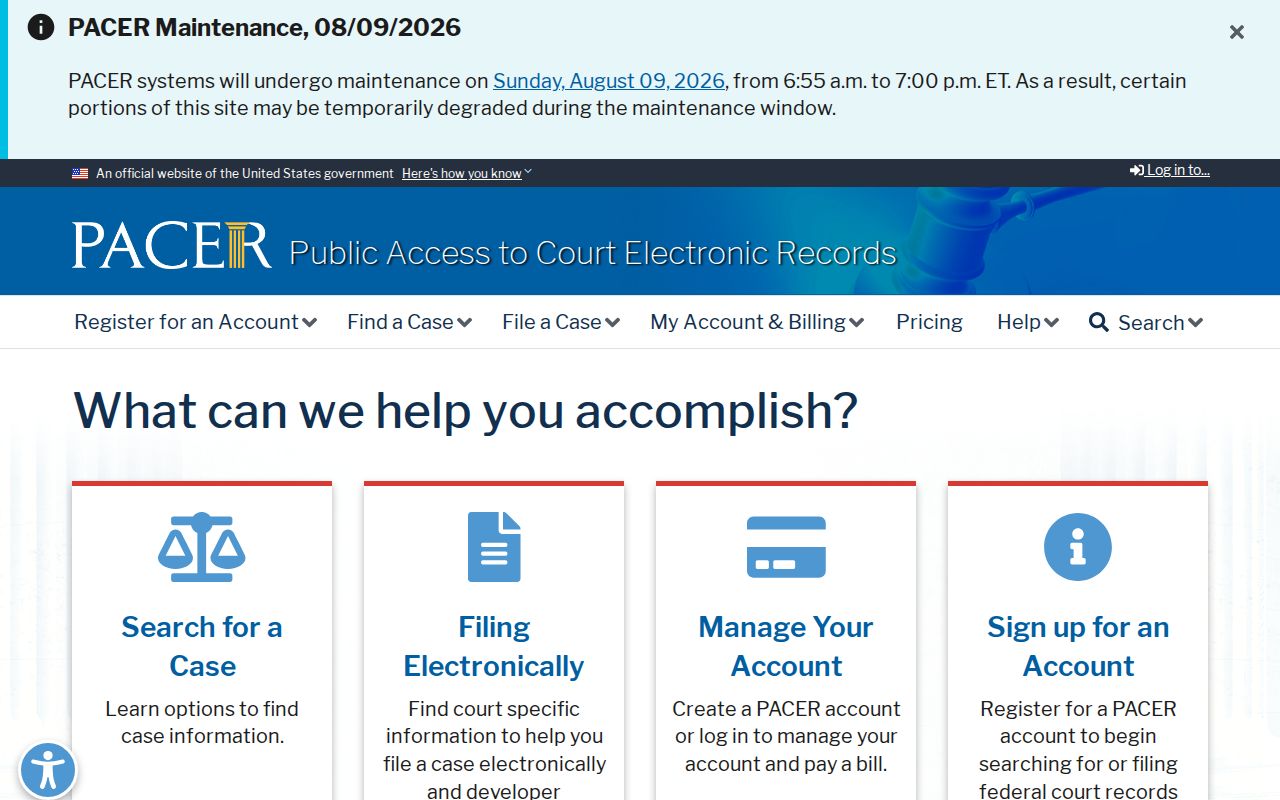
PACER charges apply under its current schedule, and sealed material will not appear. A person listed as released or not in federal custody may still have a county case, state case, or local custody event.
Note: Federal, Texas, and Limestone County systems overlap in subject matter, but each keeps a separate docket or custody record.
Criminal Records by City in Limestone County
City police departments keep the reports they create, and municipal courts retain their own Class C and ordinance cases. Mexia, Groesbeck, and Coolidge therefore add local entry points to a Limestone County criminal history search. County jail and higher court records still route to Groesbeck, but the first report request often belongs with the city where the event occurred.
Mexia Criminal History
Population 6,916 · Police Records handles criminal, arrest, incident, and accident records; Municipal Court keeps Class C cases.
Groesbeck Criminal History
Population 3,960 · Police and City Secretary contacts are distinct from the county jail and courthouse clerks.
Coolidge Criminal History
Population 800 · The city publishes a written Public Information Act request route and municipal court contact.
Use the city guide for the originating police report, then follow the record into the appropriate Limestone County court or jail system when the event moved beyond the city.
Limestone County Criminal Records Across Distance
Limestone County covered 905.4 land square miles and had an estimated 22,849 residents in 2025. The largest city is Mexia, yet the main county record offices sit in Groesbeck. That rural pattern makes phone and written options important for people in Coolidge, Thornton, Kosse, Tehuacana, and outlying areas. Call the correct office before travel, ask whether a file is electronic, paper, archived, or off-site, and confirm the cost and delivery options for copies.
The courthouse itself reflects the long record trail. Limestone County was formed in 1846, and Groesbeck became the county seat in 1873 after Springfield's courthouse era ended. The current courthouse was completed in 1924 and later became a Recorded Texas Historic Landmark. Modern searches still depend on the separate clerk counters inside and around that historic county center.
For police reports, the originating agency remains key. Mexia Police publishes a records function, Groesbeck routes public information through police and city contacts, and Coolidge posts a written PIA page and form. There is no countywide incident-report pool.