
Running a Sex Offender Check in Limestone County
The Texas Public Sex Offender Registry is the official statewide starting point. Texas Department of Public Safety Crime Records Division manages it, while local registration authorities collect and verify much of the source information. Search by a known name when identity is clear. Search by Limestone County, a city, ZIP code, or address when the goal is awareness around a home, school route, or family destination. The live interface controls which geographic choices are available, so use the labels displayed at the time of the search.
There is no verified separate Limestone County map or county-hosted registry list in the research. That makes the DPS search the public source to use first. A zero result has limits. Spelling, aliases, address changes, registration status, and search radius can affect what appears. Confirm a possible match through the complete profile, and call the relevant registering authority when a compliance concern involves current local facts.
Limestone County DPS Registry View
The official DPS registry search screen shows why location and identity should be checked together.
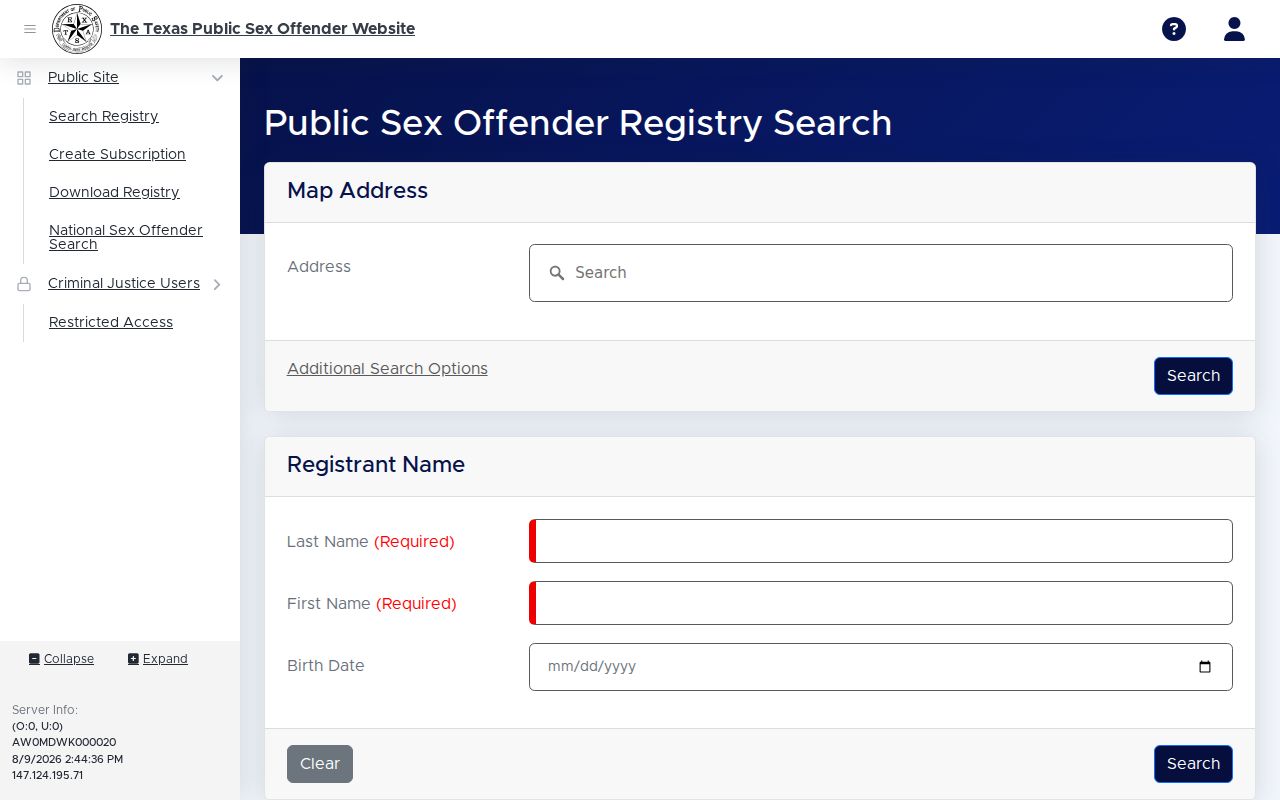
The screen is an entry point, not a finding by itself. Start with the narrowest facts known, avoid guessing identity traits, and widen the geographic search only when the first pass does not answer the safety question. Texas registry entries can include a current address or geographic location, but the profile must be read for the registration and compliance context attached to it.
A local search also needs the right city. Mexia, Groesbeck, and Coolidge fall within Limestone County, but a city-only query can omit rural addresses. A county filter can catch locations outside municipal limits. Address and radius tools, when the live registry offers them, serve a different purpose from a person-name search. One asks who is associated with an area; the other tries to distinguish a known person from people with similar names.
Searching the Texas Public Sex Offender Registry
DPS may update the registry interface, and the live search timed out during part of the county research. The stable search concepts are name and geography. Do not assume an unverified dropdown or alert function exists. Use the controls the official page displays and keep enough identifiers at hand to avoid confusing two people.
- Open the official Texas registry search and read its conditions of use before entering data.
- Choose a name search for a known person or a geographic search for Limestone County, a city, ZIP code, address, or map area when offered.
- Compare the result list with known identifiers. Similar names alone do not establish identity.
- Open the full profile and read the offense, risk, registration, address, and compliance fields in context.
| Search concept | Input | Required | Use |
|---|---|---|---|
| Name | Text | Depends on mode | Use full known spelling and review aliases on the profile. |
| City or ZIP | Text or selection | No | Narrows the search to a Limestone County community. |
| County | Selection | No | Captures municipal and rural Limestone County locations. |
| Address or map radius | Geographic control, when offered | No | Supports an area-based safety check without naming a person. |
What a Registry Profile Shows
Texas law requires a detailed registration record, but the public profile is narrower. Article 62.051 covers identifiers and registration facts collected by authorities. Article 62.005 shields Social Security and driver's-license numbers, phone numbers, employer details, victim-identifying facts, and other protected data. A public Limestone County profile can still offer enough information to distinguish a match and understand the registration basis.
| Name and Aliases | Published names used to distinguish the registrant from people with similar names. |
|---|---|
| Photo and Description | A public photograph and physical descriptors that may include sex, race, height, weight, eyes, and hair. |
| Address or Geography | The registered residence or other location information the public profile lawfully displays. |
| Offense Details | Reportable offense, statute or category, jurisdiction, conviction date, and a protected-form victim age category. |
| Risk and Status | Texas risk designation, registration information, and compliance indicators exposed by the live profile. |
| Vehicle Information | Vehicle details where the live DPS profile makes them public. |
Read dates closely. A profile reflects a legal registration duty, not a new accusation. It also does not summarize every filing in the underlying court case. Anyone who needs the judgment or disposition should use the court that handled that case, subject to access restrictions.
Limestone County Protected Registry Fields
The Texas DPS registry notices frame what the public system releases and how it should be used.
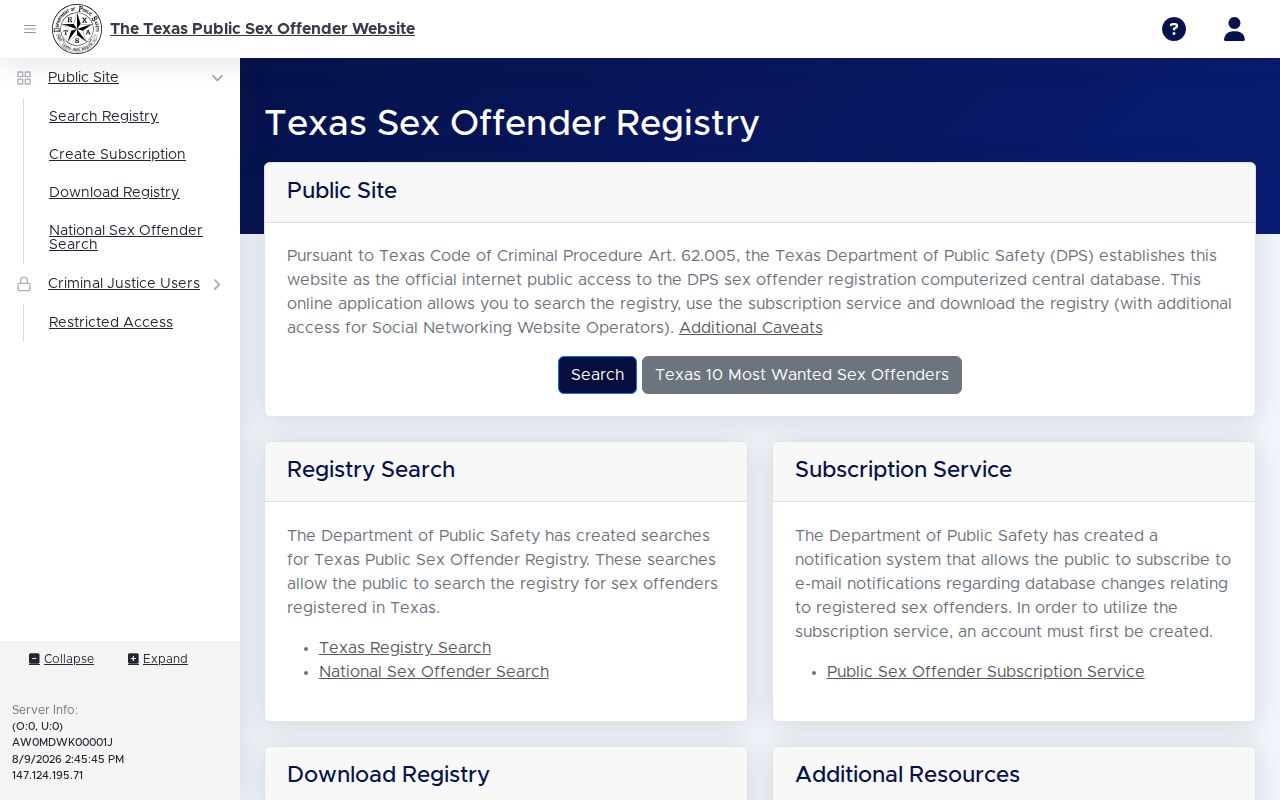
The public view deliberately omits sensitive identifiers. That is not a data defect. Social Security numbers, driver's-license numbers, phone numbers, employer details, and victim-identifying information are withheld by law. Do not try to fill those gaps through unofficial people-search sources. The lawful way to resolve a possible identity mismatch is to compare the public profile's permitted fields and ask the registration authority about a current compliance concern.
Address information also requires care. A map pin does not describe property boundaries, daily movement, custody, or a person's current risk by itself. Risk designation, verification status, offense information, and update dates provide the context. Save or print only what is needed for a legitimate personal-safety purpose, and recheck the live record before relying on an old copy.
Registration Requirements and Levels in Texas
Texas risk levels are not federal SORNA tiers. Level 1 means the assessment finds low danger and a lower likelihood of continued criminal sexual conduct. Level 2 means moderate danger and a possibility of continuation. Level 3 means serious danger and an assessment that conduct will continue. Civil commitment is a separate court status for qualifying findings. Those labels do not set one simple registration term for every person.
| Texas category | General duration | Verification |
|---|---|---|
| Enumerated adult lifetime category | Lifetime under Article 62.101(a) | Often annual; some qualifying histories require at least every 90 days. |
| Other adult reportable case | Through the tenth anniversary of the latest statutory release, supervision discharge, or dismissal event | Generally annual within the birthday window unless another rule applies. |
| Juvenile adjudication | Through the tenth anniversary of the later of disposition or completion | Set by the applicable Chapter 62 route. |
| Civil commitment | Controlled by the qualifying status and applicable law | More frequent reporting rules apply. |
Duration turns on the reportable offense and statutory events, not merely the displayed risk level. Extrajurisdictional cases can follow the duration required by the originating federal, military, foreign, or other jurisdiction as Chapter 62 provides. The profile and the registering authority are better sources than a guessed ten-year or lifetime label.
Limestone County Registry Notification
Texas uses public registry publication and, for qualifying high-risk community-notification cases, DPS postcard notice. The county research did not verify an email or proximity-alert signup. Do not promise one. A resident who wants to monitor an area should rerun the official location search and check DPS notices for the current functions.
For a search that crosses state lines, use the National Sex Offender Public Website maintained by the U.S. Department of Justice.
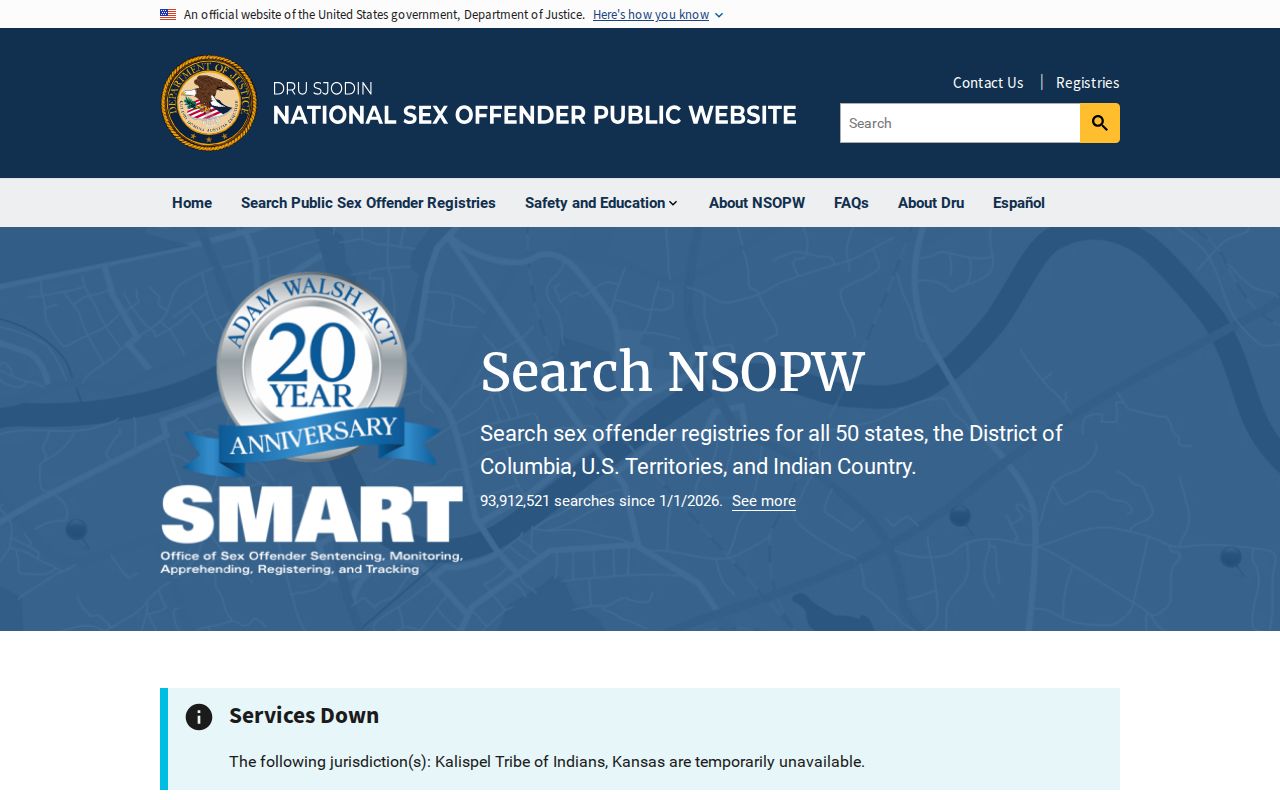
NSOPW federates searches across participating jurisdictions, so it can add reach when a person moved into or out of Texas. Its result still points back to the source jurisdiction. Recheck the Texas profile for a Limestone County address and use the source state's record for a registration maintained elsewhere.
Texas Chapter 62 does not create one universal statewide school or park buffer based solely on registration. Supervision terms and local rules may differ. A map distance should therefore not be read as proof that a residence violates the law.
Limestone County Registration Duration
The official Texas Sex Offender Registration Program statute supplies the controlling rules.
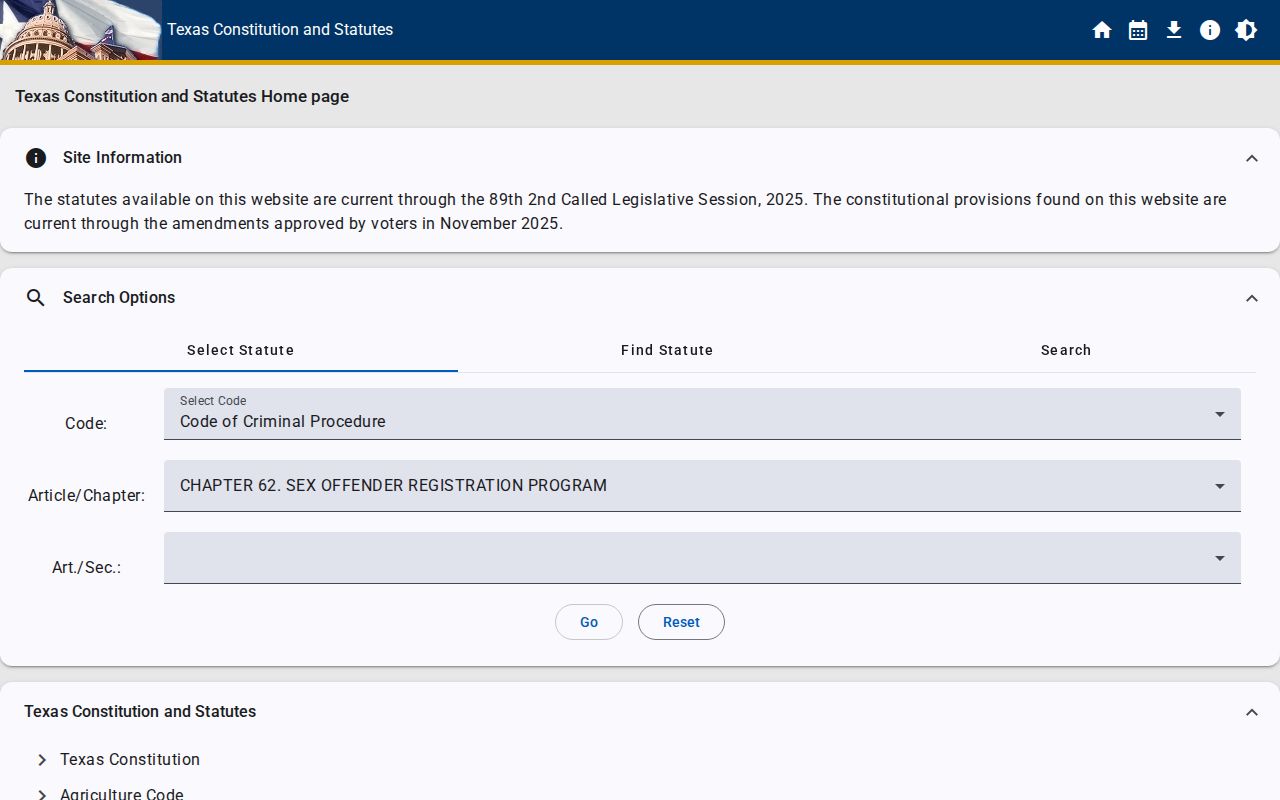
Article 62.101 ties the end date to the offense category and the latest listed release, supervision, adjudication, or dismissal event. A ten-year term does not always start on the conviction date. Lifetime categories do not become shorter because a profile displays a low risk level. Juvenile and out-of-jurisdiction routes have their own statutory tests.
Verification can be annual, at least every 90 days for specified repeat or sexually violent histories, or more frequent for civil commitment. A missed update may produce a compliance concern, but the public should report facts to the proper authority and let officials determine whether a violation occurred.
Lawful Use and Community Notification
Registry information supports awareness and practical safety choices. It can help a family review an area, distinguish a known person, or find the right authority for a concern. It is not a court judgment database, a prediction tool, or an invitation to punish someone outside the legal process. Verify a profile through DPS, keep the result in context, and report suspected noncompliance to the responsible municipal or county agency.
Use Registry Data Lawfully: Texas Chapter 62 does not permit threats, harassment, intimidation, or vigilantism against a registrant or household. Report concerns to law enforcement.
High-risk postcard notices and registry publication are forms of official community notification. They do not transfer enforcement power to the public. An emergency belongs with 911. A nonurgent address or verification issue belongs with the registration authority, backed by the profile link and a clear description of the observed discrepancy.
Note: A registry match confirms a published registration record, not a new offense, present custody, or the outcome of any later case.